

Posts
Priorat: from monastic roots to the present day

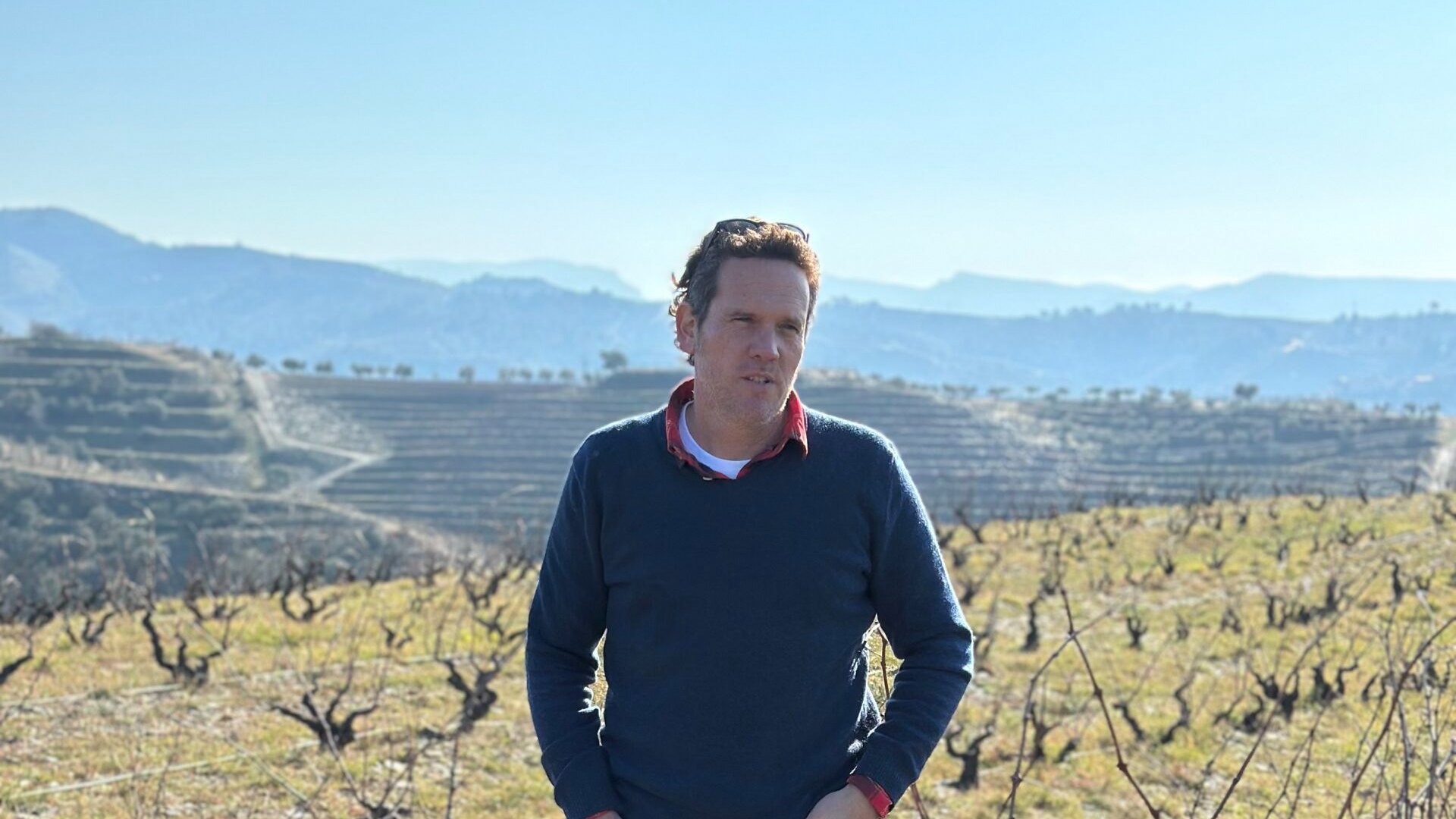
Introduction: Set among the rugged uplands of Catalonia, Priorat is a place where history and wine cultivate a mighty story. After centuries of obscurity, the region has risen once again to the international elite thanks to its powerful, mineral red wines, born of ancient vines growing on steep slopes of llicorella soil. This article takes the reader on a historical journey from the 12th-century monasteries to the Priorat of today, highlighting the region's uniqueness, little-known facts and its most remarkable wineries: Clos Mogador, Clos i Terrasses (Clos Erasmus), Terroir al Limit and new-generation projects such as Vinya del Vuit, Espectacle del Montsant and Venus La Universal.
A historical overview: monks, decline and rebirth
Priorat’s wine history stretches back to the early Middle Ages. In 1194 Carthusian monks founded the monastery of Scala Dei (“God’s ladder”), planting the region’s first vines in poor, stony soil. Over the centuries grapes were grown and wine was made, with each variety finding its ideal site. By the 18th century Priorat was flourishing, exporting wines and grape-based spirits throughout Europe. But the phylloxera epidemic in 1893, the political turmoil and economic hardship that followed led to the region's decline. By the 1970s Priorat had sunk into obscurity: the population had left, the terraces were crumbling and only a few cooperatives and home cellars remained.
Priorat’s modern renaissance began In 1979, when the young winemaker René Barbier arrived in the village of Gratallops, carrying a bold vision. He was soon joined by others with a similar dedication – local farmer Carles Pastrana, Álvaro Palacios with his Rioja background, Bordeaux-trained Daphne Glorian and Professor José Luis (Josep Lluís) Pérez. They believed that Priorat’s harsh slopes could deliver world-class wine. They worked in a remarkable form of cooperation: each planted or restored a vineyard on their own plot, but in the early years the wine was made together in a single cellar. In 1989 their first wine was completed, marketed under five separate “Clos” labels: Clos Mogador, Clos de l'Obac, Clos Martinet, Clos Dofí and Clos Erasmus – and so modern Priorat began. It was a radical experiment: the use of the French word "Clos" referred to an enclosed vineyard and signalled a focus on terroir that was very rare in Spain at the time.
This first 1989 series of wines, blending old-vine Garnacha and Cariñena with grapes from newly planted Cabernet, Syrah and Merlot, was released in 1991 and won immediate acclaim. Wine critics, led by Robert Parker, fell in love with Priorat’s intensely rich, high-alcohol red wines, which suited the tastes of the time perfectly. Astonishingly, Priorat DOCa (Denominació d’Origen Qualificada) status in 1991, the highest classification in Spain, shared only with Rioja. This small, forgotten region was suddenly on the world map.
Behind this success story lay not only clever marketing but also unique terroir, which the pioneers brought to the fore. Priorat’s landscape is dramatic: a Mediterranean climate tempered by the mountains, with vineyards on steep slopes (costers) at up to 800 m. The region’s defining soil is llicorella – a reddish-black layered slate containing pieces of quartz and almost no organic matter. Barren-looking at first glance, this soil is the foundation of Priorat’s wine quality: the vines must root deeply, which leads to low yields and concentrated grapes. Old bush-trained Garnacha and Cariñena vines – many of them over 100 years old – became the backbone of modern Priorat wines.
These undemanding vines, whose roots penetrate the llicorella rock, produce few but extremely intense berries. The result is wines known for their dark colour, fullness and concentrated aromas: notes of black plum, liquorice, soot and stony minerality are common. Early vintages often included international varieties, but today winemakers are increasingly returning to pure Garnacha and Cariñena wines.
Priorat’s rebirth is often likened to rising from the ashes. By the 2000s the region was full of new wine estates. Although it is a small community (under 2000 ha of vineyards), Priorat remains highly regarded among viticulture enthusiasts. The region has recently even introduced a Burgundy-style classification system that highlights smaller areas and individual villages. Both the monks and the mavericks of the 1980s have proved that if a wine region is special, it can be brought back to life – as long as there are enough passionate people.
What makes Priorat special?
Monastic origins: The name of the region, "Priorat", comes from the Scala Dei priory and its surroundings. The monks who ruled these lands for centuries laid the foundations for grape growing and winemaking.
DOCa pioneer: Priorat is one of only two Spanish regions (together with Rioja) to have been granted the highest DOCa/DOQ status. The region achieved this in 1991 thanks to its exceptional quality.
The five “Clos”: The 1989 wine was made jointly and bottled under five different labels: Clos Mogador, Clos de l’Obac, Clos Martinet, Clos Dofí and Clos Erasmus. In the Spanish context this was a revolutionary initiative. Interestingly, however, all these wines received different scores from the same critics.
Europe's steepest vineyards: The vines grow on slopes with gradients of up to 30 degrees, often on terraces, at altitudes of 300–700 metres. The diurnal temperature swings help preserve acidity.
The rebirth of old Carignan: Once considered rustic, Carignan (Cariñena) is back in favour in Priorat, especially when it comes from century-old vineyards. It can yield exceptionally elegant wines with lively acidity.
Microclimatic features: Although the region lies near the Mediterranean, it is influenced by mountains that create cooler nights and a variable climate. Winds such as Garbinada bring relief from the summer heat.
Montsant: surrounding, yet distinct: The Montsant DO surrounds Priorat. Although the regions are close neighbours, their soils differ (Montsant has more limestone and clay), giving the wines a softer character compared with Priorat’s stony minerality.
Clos Mogador: the symbol of Priorat’s rebirth
When it comes to the revival of Priorat, Clos Mogador is a name that cannot go unmentioned. The estate was founded by René Barbier in Gratallops, and he was one of the key leaders of Priorat’s renaissance in the 1980s. In fact, Clos Mogador was part of the first collective wine that the five partners made together in 1989 and then marketed under different labels. That wine was Clos Mogador’s first official vintage, released in 1991, and it confirmed to the whole world that Priorat was capable of producing world-class wine.
Today Clos Mogador is The benchmark of quality in Priorat. The blend is based on old Garnacha and Cariñena vines, complemented in small proportions by Syrah and Cabernet Sauvignon – this reflects Barbier's original decision to combine local and international grape varieties to achieve diversity and depth.
Clos Mogador’s wines are deep, powerful yet balanced. One critic described them as „deep, powerful, yet at the same time harmonious“. Over the years Clos Mogador has earned high scores and lasting respect throughout the wine world. Notably, it was Clos Mogador’s wines that were cited as examples when Priorat applied for DOCa status.
What makes Clos Mogador special is not only its wines but also its family and philosophical approach. René Barbier was one of the first in Spain to champion single-vineyard wines (single-vineyard wines). The main vineyard, "Clos Mogador", is a 20-hectare site where olive trees, almond trees and Mediterranean herbs grow naturally among the vines, enriching both the ecosystem and the profile of the wines.
Farming is strictly organic, and today Barbier’s son René Barbier IV taken these practices further biodynamic, adding diversity to the vineyards and replanting fruit and nut trees. Their aim is to produce wine only from grapes, without additives or intervention, to express the terroir in its purest form.

In the cellar, too, Clos Mogador has changed over time: whereas in the 1990s new French oak barrels and heavy extraction were the norm, today the focus is on gentler vinification methods: natural yeasts, lower fermentation temperatures, less new oak and longer, slower fermentations. The share of international varieties has also been reduced, giving a greater role to to Grenache and Cariñena.
Clos Mogador's portfolio has grown. Alongside the flagship wine, they also make:
Manyetes – 100% Cariñena, a single-vineyard wine from the same village.
Nelin – a high-quality white Priorat blending Garnacha Blanca with other varieties.
Com Tu – a wine produced in the Montsant region with a deeper philosophical message.
But Clos Mogador remains the heart of the house – a wine that expresses Priorat’s identity. A bottle at good maturity is a true experience: black plums, liquorice, Mediterranean herbs and minerality from the llicorella soil. It is a wine that tells a story – of sun, stone, passion and family.
Clos i Terrasses (Clos Erasmus): Daphne Glorian's Grand Cru
If Clos Mogador represents the heart of Priorat, then Clos i Terrasses, known for its flagship Clos Erasmus , embodies its soul and international fame. This small winery was founded by Daphne Glorian – a Paris-born former law student of Swiss-German descent who, in 1988, spent all her savings on 17 small terraces of old vines next to Gratallops.
At the time Priorat was still forgotten, and many considered her move foolhardy. But Glorian, inspired by the enthusiasm of Barbier and Palacios, decided to take the risk – and became one of the five original „Clos“ pioneers. The wine named Clos Erasmus (named after the Renaissance philosopher Desiderius Erasmus) was released in 1991 and quickly rose to become one of Spain’s most coveted wines.
Clos Erasmus was one of the first Spanish wines to be awarded by Robert Parker 100 points (e.g. the 2004 vintage). Production volumes are still microscopic – only around 140–150 cases. This stems from Glorian’s deliberate wish to safeguard quality.
The vines are grown biodynamically, from 2004 under the direction of Ester Nin, who later became one of the region’s most highly regarded winemakers. Glorian’s vineyards – such as Escales, Aubagues and Socarrats – are located around Gratallops. The grapes are mainly Garnacha, complemented by Syrah and historically also a little Cabernet Sauvignon, although the proportion of the latter has been reduced over time.
Different plots bring different qualities to the wine: for example Escales is on the north-facing slope and gives more aromatic, lighter wines, Socarrats by contrast warmer and more structured. Clos Erasmus is a blend of the best grapes from these plots; all the remaining fruit goes into the second wine Laurel in the blend, which is highly regarded in its own right.
Daphne Glorian has always favoured Burgundian style – elegance, balance and the expression of terroir. He uses natural yeasts, careful extraction and ages the wines mainly in used French oak barrels, avoiding a heavy oak flavour. As a result, Clos Erasmus has evolved into an ever more precise, refined and age-worthy wine.
The wine is often described as luxurious, velvety and mineral, with aromas ranging from black raspberry and violets to graphite and scorched stone. It is a wine that manages to be both powerful and refined.
Clos i Terrasses is symbolic in name too: the Spanish „and terraces“ reflects Glorian’s love for her vineyards and takes us back to the stony slopes where it all began.

Terroir al Límit: a new path in Priorat
The keywords of Priorat’s second chapter are not only refinement but also reimaginingof what Priorat wine could be. At the forefront of this approach is Terroir al Límit, a winery that over the past couple of decades has become a symbol of a new philosophy: elegance, transparency and expression of terroir, rather than mere extraction and power.
Terroir al Límit was founded by in 2001 two foreigners – Dominik Huber from Germany and Eben Sadie from South Africa. They met at the Mas Martinet winery, where both were working the harvest, and shared the conviction that Priorat could create more than just massive wines. The first wines were made in collaboration with the local cooperative (Cims de Porrera); later they moved into their own tiny cellar in the village of Torroja. And so Terroir al Límit, or “terroir to the limit”, was born.
From the outset, Huber and Sadie focused on a Burgundian approach: single vineyards, village wines and lower-alcohol wines that reflect the site and the soil. They released a number of single-vineyard wines such as Dits del Terra, Arbossar, Les Manyes, Les Tosses, as well as village blends such as Torroja and later Terra de Cuques.
From 2008–2009 onwards, Huber gradually became a true pioneer of innovation. He began using 100% whole-bunch fermentation, completely abandoned crushing, pumping over and punching down. The grapes ferment slowly under their own weight, in a partly carbon-dioxide environment, resulting in softer tannins and more delicate aromas.
At the same time, he gave up from small new oak barrels, preferring larger neutral barrels and the use of concrete vats to preserve the purity of the fruit and the terroir. The grapes are grown biodynamically and organically. Huber has made it clear that in the context of climate change, organic farming alone is no longer enough – soil moisture must be preserved and grapes picked earlier to achieve ripeness at lower sugar levels.
The result? Wines that are distinctly different from the classic Priorat heavyweights: a paler colour, fresh red berries, fine tannins and chalky minerality. Luis Gutiérrez has described them as „sharply defined and fresh... more about place than variety“. In their hands even Cariñena can show elegant, even floral aromas.
Terroir al Límit’s philosophy is partly rooted in the past: Huber tasted old Priorat wines from the 1970s, made in large casks, and realised that this was the direction that suited the region’s heritage. He also created Terroir Històricu, a modest wine range that pays homage to the traditional co-op style: natural, unfiltered, village-based wine.
Wines such as Les Manyes have even received 100-point scores – even though they have 13% alcohol and a more delicate structure than the powerful icons of the past. This proves that finesse may be Priorat’s new strength.
Today Dominik Huber is among the most influential of Priorat’s younger generation of winemakers. He has helped change perceptions of what Priorat wine can be: not only dark and dense, but also translucent, saline, floral and exciting. Terroir al Límit has shown that even in sun-drenched Priorat an elegant style is not only possible, but wonderful.

New projects to discover: the new wave of Priorat and Montsant
La Vinya del Vuit: eight friends and a century-old vineyard
La Vinya del Vuit (in translation: „Eight vineyards“) is an extraordinary collaborative project that embodies Priorat’s community spirit. It was created in 2001 by eight young winemakers and friends, including Sara Pérez, René Barbier IV, Ester Nin and others. Their goal was to save a forgotten, over- 100-year-old vineyard between Vilella Baixa and Gratallops, and to make an uncompromising wine from it, with a pure heart.
The vineyard lies on a steep terrace full of llicorella soil and old Cariñena and Garnacha vines. All work is done entirely by hand, even using for ploughing with mules, so as not to damage the stony soil. The grapes are picked in the cool of early morning, sorted in small crates, and the wine is ready in open 500-litre oak barrels, fermented with wild yeast.
The entire wine is around 70% Carignan and 30% Grenache, which is bottled after months of ageing, and the bottles go on sale only after 2 years. Only 1900–2000 bottles a year, 8 bottles per case – a tribute to the eight creators. The label changes every year, expressing the playfulness and creativity that surround the project.
La Vinya del Vuit is not a commercial project but soulful expression. The wine is deep, full-bodied, mineral and elegant, expressing the strength of old vines and the strength of friendship.

Espectacle del Montsant: Grenache’s grand performance
Espectacle is a wine made outside Priorat's borders, in the Montsant DO, yet in quality it certainly belongs among Priorat's elite. The project was founded René Barbier’ and his wife Isabelle, together with oenologists Fernando and Marta Zamora and Charlotte and Christopher Cannan. The wine comes from a 5-hectare, from Garnacha over 100 years old from the vineyard La Figueras, from an altitude of 700 metres.
This hill, with views over the Montsant mountains and the Ebro Valley beyond, is extraordinary. The soil here is limestone and clay rather than llicorella, giving the wine a distinctive floral quality and softness. The grapes are fermented in a large oak barrel, age there for 14–16 months, and the result is a wine that is at once powerful and silky, spicy and elegant.
Espectacle is often called Montsant’s L’Ermita, a nod to Álvaro Palacios's iconic Priorat wine. It is 100% Garnacha, whose bouquet ranges from ripe raspberries and strawberries to bay leaf, lavender and anise.
Venus La Universal: the creative expression of Sara Pérez and René Barbier IV
Venus La Universal is more than a winery – it is a lifestyle and a philosophy. Founded in 1999 by Sara Pérez, later joined by her partner René Barbier the younger. Their aim was to express femininity and sensitivity in wine, to give a voice to softness and intuition in a world dominated by masculine power.
Wines such as Venus and Dido is made organically, fermented in different vessels – concrete, clay amphorae, large casks – depending on the grape and the vintage. Dido white is a blend of Macabeu, Garnacha Blanca and Xarel·lo varieties, partly with skin contact, aged amphorae and used oak.
They have also made voyages of discovery Conca de Barberà a region where they grow the local Trepat grape. Trepat yields light, low-alcohol red and rosé wines, ideal for summer and for enjoying chilled. Òrbita Venus Trepat is a clear, aromatic wine with lively acidity, reminiscent of Beaujolais or a light Pinot Noir.
Venus La Universal combines depth and lightness, tradition and experimentation. This is a place where wine is made not just for the market but from the soul. Their message is clear: wine is life, not merely a product.

Afterword: Priorat – more than a wine region
Priorat is not simply a wine region – it is a story of rebirth, vision and refusal to compromise. Every bottle that comes from here carries not only the taste of the grapes but also the stoniness of the land, the passion of its people and the layers of its history. Whether legendary names such as Clos Mogador and Clos Erasmus or undiscovered treasures such as La Vinya del Vuit or Òrbita Venus – the wines of Priorat speak a language all their own. They are like family stories, retold with every sip.
When you choose a Priorat wine, you choose a story – a symbiosis of landscape and people. And that, dear wine lovers, is worth discovering – again and again.