

Posts
Top wines from Priorat and Montsant at a Veino wine evening – an experience not to be missed

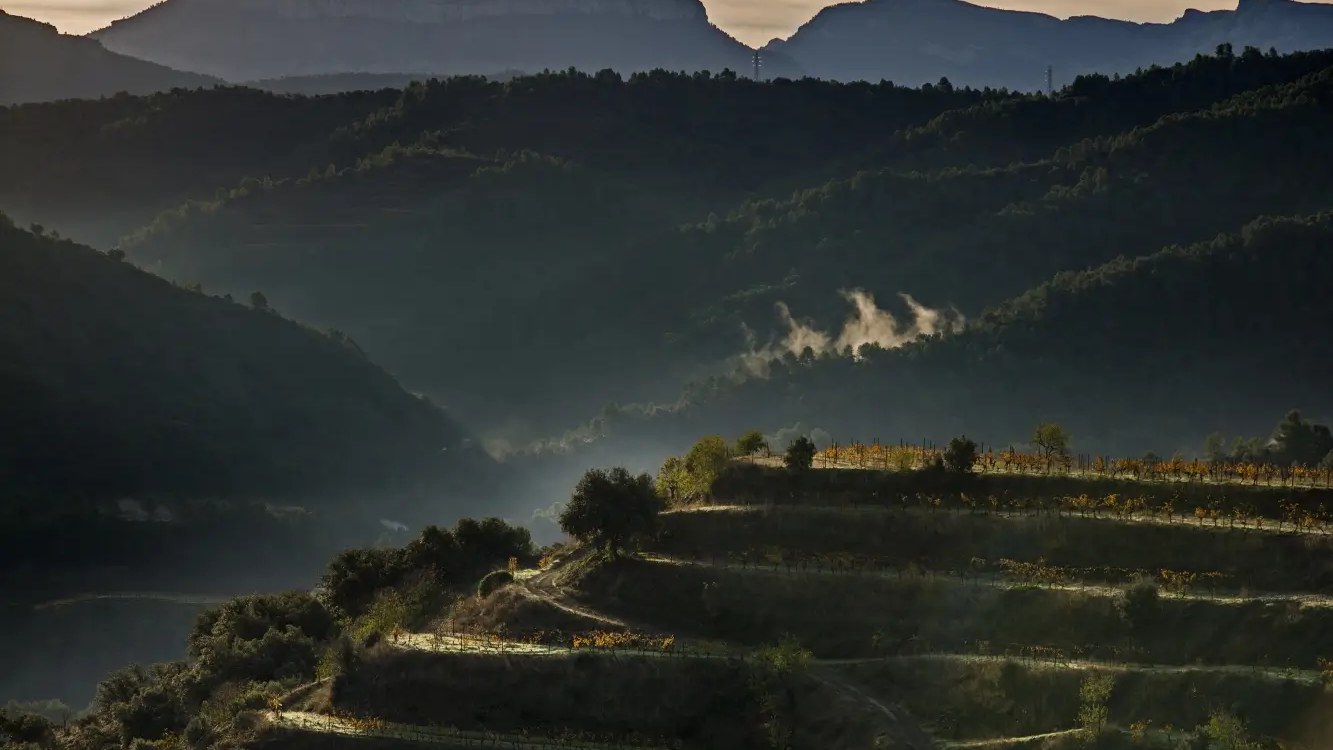
Top wines from Priorat and Montsant at the Veino tasting – an experience not to be missed
On Thursday 9 October at 19:00, Estonian wine lovers have a rare opportunity at Veino wine bar to taste the very finest wines of Priorat and Montsant. This is a tasting where an 85-euro ticket brings to the table a selection of world-famous wines very rarely seen in Estonia, including accompanying snacks. Below we introduce the wines and producers featured at the event and explain what makes them so special and why this particular evening deserves the attention of every serious wine lover.
Wines to be tasted at the tasting
At the wine evening, the following hand-picked gems from Priorat and Montsant will be poured by the half-glass:
- Clos i Terrasses (Priorat) – Laurel Blanc 2023 (white) and Clos Erasmus 2022 (red)
- Clos Mogador (Priorat & Montsant) – Nelin 2021 (white), Com Tu 2021 (red, Montsant DO) and Clos Mogador 2021 (red)
- Venus La Universal (Montsant) – Dido “La Solució Rosa” 2023 (rosé)
- Espectacle Vins (Montsant) – Espectacle del Montsant 2022 (red)
- Terroir al Limit (Priorat) – L’Arbossar 2022 (red) and Dits del Terra 2022 (red)
Below we take a closer look at these wineries and regions – from the legends of Priorat to the “new wave” of Montsant.
Priorat and Montsant – exceptional wine regions
Priorat is one of only two top-category wine regions in Spain (DOQ), and it drew the world's attention in the 1990s with its unique terroir and powerful wines. The region's signature is llicorella – soil of black slate and quartz – on which grow old Garnacha and Cariñena vines give the wines exceptional concentration and minerality. Just 40 years ago Priorat was a forgotten corner, but a small group of visionaries (including René Barbier and Daphne Glorian) saw the region’s potential and proved that world-class wines could be made here. Today Priorat is firmly on the world wine map, and its top red wines rank among Spain’s most sought-after.
Montsant , by contrast, is the region that encircles Priorat like a ring (DO since 2001) and can be seen as Priorat’s “quieter” neighbour. Besides slate, Montsant has clay-limestone soils, and some of its vineyards lie at slightly cooler altitudes. Montsant’s vineyards (predominantly Garnatxa and Carinyena grape) were long the preserve of the cooperatives, but over the last twenty years or so small producers and new projects have emerged there too, showing that Montsant can offer wines offering excellent value for money and even true gems approaching Priorat in quality. Montsant is like a talent working in the shadows – the “valley of silence”, as wine critic Andrew Jefford poetically called it – one that surprises those willing to look more closely.
Next we get more specific, looking at the background and philosophy of each winery represented at the tasting, and at what their wines promise in the glass.
The revivers of Priorat: Clos Mogador and Clos i Terrasses
Clos Mogador and Clos i Terrasses are names that symbolise Priorat's revival. The founders of these very wine houses, René Barbier (Clos Mogador) and Daphne Glorian (Clos i Terrasses), were part of the pioneering “quartet” who, in the late 1980s, breathed life back into Priorat's neglected terraces. Their obsession with the potential of Priorat's soil soon paid off: Clos Mogador flagship wines have earned scores of up to 98 points from critics and drawn comparisons with icons such as Château Margaux and Sassicaia. Clos Mogador 2021 red has been described as a masterpiece of the wine world – a captivating complexity of Mediterranean herbs and fresh fruit on the nose, immense depth on the palate, yet at the same time surprising elegance and balance. This wine is born near the village of Gratallops, in an amphitheatre-shaped high mountain valley where llicorella soil and the large swings between night and day temperatures give the wine both power and fine nuance. Barbier’s winemaking mastery is also illustrated by a unique technique: he uses olive-oil presses instead of conventional wine presses, extracting only half the usual juice from each grape – which ensures exceptional concentration. Besides reds, Barbier was one of the first to start making white wine in Priorat – Nelin is his Garnacha Blanca and other local varieties, first made in 2001, showing that Priorat can also produce white wines of powerful character. The 2021 vintage Nelin (which can also be tasted at Veino) marked this wine’s 20th anniversary and earned no fewer than 96 points from Wine Advocate – a complex white with aromas of „Mediterranean herbs, dried hay and waxy apple“, offering a rare combination of depth and freshness. Clos Mogador works using organic and biodynamic methods, so that the vines grow in as natural a balance as possible – their principle is that wine is born above all in the vineyard, not in the cellar.
Clos i Terrasses has an equally captivating story. In 1989, when Priorat's reputation was a big question mark, Barbier and Alvaro Palacios persuaded their friend Daphne Glorian to spend all her savings on a tiny old Garnacha vineyard near Gratallops. And so the Clos i Terrasses winery was born, along with its flagship Clos Erasmus – a wine that soon gained cult status. Initially Glorian made the wine at the Barbier winery until he had his own cellar, and with each vintage the quality climbed ever higher. Today Clos Erasmus synonymous with Priorat, being one of Spain’s most awarded wines and among the most prized by collectors. The 2022 vintage of Clos Erasmus, served at the Veino tasting, also embodies Priorat’s elegant power – a deep ruby-red wine with ripe black berries, spices and liquorice on the nose, and on the palate concentrated slate minerality, silky tannins and an exceptionally long finish. No wonder critics call this wine the benchmark of Priorat, which graces the collection of any serious wine lover. Beyond her vision, the Daphne Glorian phenomenon lies in the smallest details: her 10-hectare vineyard has extremely low yields, and she is committed to hand-harvesting and rigorous standards in the vineyard. Recently Glorian has also revealed new sides of herself – Laurel Blanc 2023 is his fresh white wine, which can also be tasted on 9 October. Laurel Blanc (the name means laurel) is made 85% Garnacha Blanca, 8% Chenin Blanc and 7% Viognier grapes, hand-picked and gently pressed. The wine fermented with native yeasts partly in 400-litre French oak barrels and partly in clay amphorae, maturing in them for 7 months – the result is a full-bodied yet restrained white Priorat in which notes of ripe stone fruit and citrus are framed by saline minerality and a subtle oak backdrop. Laurel Blanc 2023 is Daphne’s first white wine from Priorat, whose fruit comes from a recently acquired 13-hectare holding in the Les Manyetes paraje’s (on the plot). This step marks Glorian's commitment to celebrating the juicy Priorat terroir from a new angle – organic viticulture and minimal intervention in the cellar ensure that every bottle of Laurel Blanc reflects the character of this exceptional site as authentically as possible.
At the tasting, wine lovers can taste the creations of both Barbier and Glorian side by side – it is like a journey to the very sources of Priorat's renaissance. In the glass you find at once Clos Mogador 2021 and Clos Erasmus 2022 – two legends that laid the foundations of Priorat’s present-day fame. You can also compare two of Priorat’s top whites – Nelin 2021 and Laurel Blanc 2023. It is something of a masterclass running from Priorat's past to the present day, and proof that the local wine gurus' drive for excellence has not faded.
Montsant’s new stars: Venus La Universal and Espectacle
If Priorat was revived by visionaries at the end of the last century, then the rise of Montsant is largely driven by the passion of a new generation of winemakers. Interestingly, the Barbier and Pérez names are on stage here again – this time in the hands of the younger generation. Venus La Universal is a wine project led by Sara Pérez and René Barbier (Jr.) – both are children of Priorat’s pioneers (Sara’s father is Josep Lluís Pérez of Mas Martinet and René’s father is the founder of Clos Mogador). Young yet already experienced winemakers in their own right, in the 2000s they decided to begin their journey together not in Priorat, but in the neighbouring, somewhat overshadowed Montsant area. Their aim has been “to interpret femininity through wine” – may sound surprising, given that this is southern Catalonia’s Garnacha and Carineña plots, but once you taste the result, the idea takes on a clear meaning. Venus wines are supremely elegant, finely textured and moderate in alcohol, showing Montsant’s softer, more sensual side. René and Sara are essentially community winery – they work with four small grape-growing families around Falset (some 4 ha of vineyards in total) and also farm one tiny plot themselves. These vineyards are their sole suppliers, so they are farmed strictly according to the couple’s guidelines – in harmony with nature (organic farming) and with a focus on quality. Dido and Venus are the names of their wine ranges – the first (Dido) comes from the sandy saulósoils, which give a ripe, berry-fruited and lively character. The other (Venus) comes from vines growing on clay-limestone soils around the villages of Marçà and Guiamets, giving the wines the complexity and depth of slower ripening. All the wines are made with minimal intervention – wild yeasts, very little added sulphur, long ageing on the lees – to let Montsant’s to let the terroir and the “silence of voices” speak for themselves.
At the Veino tasting we will get to Venus La Universal to taste an exceptional rosé Dido “La Solució Rosa” 2023. This is far from an ordinary rosé, but rather a serious Mediterranean white wine that happens to have a delicate pink colour. La Solució Rosa is born as a co-fermented field blend from a vineyard interplanted with both white and red grapes – mainly Garnacha (tinta, blanca and even gris), plus a little Macabeo, Cariñena and Tempranillo. The grapes are pressed directly and the wine is aged for up to 16 months in large old oak barrels and amphorae. The result is “rosado” with a spicy mineral nuance, which is more reminiscent of a white made from pale-skinned grapes: a wine with a silky texture, restrained fruit and a long, saline finish – a wonderful food wine. It is no coincidence that the 2021 Dido rosé received as much as 94 points from Wine Advocate, and critics consider the 2022 vintage “one of the region’s finest rosés – with aromas of wild strawberry, flowers and warm earth, a powerfully built wine on the palate that unfolds layer by layer”. It is also noted that the wine ages superbly in bottle and that earlier vintages are still “in very good shape” today – so this is a rosé you can confidently lay down in the cellar and enjoy later. Such a complex, small-batch rosé is a great rarity in Estonia, which makes this tasting all the more special.
The second Montsant representative at the tasting is Espectacle Vins and their Espectacle del Montsant 2022. While Venus La Universal shows Montsant’s delicate and poetic face, Espectacle brings out the drama of this region and its potential to rival the legends of Priorat itself. Espectacle (meaning “spectacle”) is in fact a project worthy of its name: in 2004 René Barbier heard about an ancient vineyard that had come up for sale in the village of La Figuera in Montsant – a site which, set among towering limestone cliffs, reminded him of the famous Hermitage hill in the Rhône Valley, or even Priorat's legendary L’Ermita slope. Barbier knew at once that such was an opportunity not to be missed. He gathered a circle of leading friends: his wife Isabelle, the experienced wine professors Fernando and Marta Zamora from the University of Tarragona, and the world-famous wine merchant Christopher Cannan (with his wife Charlotte). Together they bought, in the village of La Figuera, an incredibly steep vineyard of around 2 hectares, where Garnacha vines more than a hundred years old were growing. Their aim was straightforward: to farm these old vineyards with the utmost care and respect, harvest the finest Grenache from them and make a top-flight wine that would express the terroir of Montsant with the same grandeur as L’Ermita does in Priorat. René Barbier has affectionately called the Espectacle vineyard “the L’Ermita of Montsant”.
Since the very first vintages, Espectacle del Montsant has won enormous acclaim – Wine Advocate, for example, judged the 2021 vintage worthy of 99 points, highlighting the wine's perfumed elegance, powerful velvety depth and pure style entirely free of overripeness. This is a truly rare wine: only a few thousand bottles are made each year, shared among discerning collectors. Espectacle is made in a way as special as the story of its birth – all the grapes are sorted by hand, fermentation takes place in a single large French oak barrel over about a month, and the wine then ages in the same vessel for a further 14–16 months before bottling. The result is a wine with the concentrated power of an old vineyard, together with a charming balance of spice, herbs and ripe berries. Montsant’s from pure Garnacha Espectacle is a wine often described as “Montsant's ambassador in the pantheon of world wines” – it was this very wine that made the world realise that Montsant, too, deserves top-flight attention. For wine lovers in Estonia, a glass of Espectacle is a practically unattainable dream, as this wine is not found in local shops or on restaurant wine lists. Now, however, the Veino evening offers the chance to make that dream come true and experience Montsant’s “spectacle” for yourself.
Terroir al Limit – a new era for Priorat
The reputation of Priorat’s wines has historically been shaped by great power and rusticity, but Terroir al Limit represents a new school that has shown that Priorat can offer a different kind of beauty too. This winery was founded in the early 2000s by Dominik Huber (from Germany) and Eben Sadie (from South Africa) – two young winemakers captivated by the Priorat landscape who dreamed of more elegant wines. Today the project is led by Dominik Huber, and his philosophy is “to take the expression of terroir to its very limit” – that is exactly what the name means Terroir al Limit. Huber is has radically transformed the style of Priorat wine, abandoning heavy oak ageing and overripe extraction and moving, in the Burgundian mould, towards lightness, purity and fine structure. You will not find a single small oak barrel in their cellar – all the wine matures in concrete vessels or amphorae, so that the oak influence is minimal. Fermentation uses whole bunches (whole-bunch fermentation) and the grapes are organically grown and hand-picked. Terroir al Limit's wines are “airy, ethereal single-vineyard wines from Grenache and Carignan”, which emphasise the nuances of the site rather than a show of varietal power. Neal Martin has written that “Terroir al Limit doesn’t just make wine – they redefine what Priorat is capable of”. It is no exaggeration to say that their wines appeal equally to lovers of Spanish wine and admirers of Burgundy, as they unite southern warmth and northern elegance into a single whole.
At the Veino tasting we will be able to try no fewer than two of Terroir al Limit’s top wines: L’Arbossar 2022 and Dits del Terra 2022. Both are single-vineyard red wines from 100% Carignan (Cariñena) – a grape which in Priorat gives wines of deep colour, high acidity and good ageing potential. L’Arbossar comes from a north-facing slope just outside Porrera, from 90-year-old Cariñena vineyard, Dits del Terra (“Fingers of the Earth”), meanwhile, comes from 60+-year-old vines on a more southerly slope near Torroja. Interestingly, the 2022 vintage revealed that the warmer-sited Dits del Terra the wine came out unexpectedly delicate, floral and silky, while L’Arbossar showed a somewhat more rustic, earthy character – demonstrating how big a role the details of terroir play, even between neighbouring plots. Both wines are in extremely limited quantities: only a few thousand bottles of each are made per year, which makes them hard to find even on the international market. Yet they have won critics’ acclaim – both Luis Gutiérrez of Wine Advocate and Master of Wine Tim Atkin have awarded the 2022 Arbossar and Dits del Terra 95–96 points, praising the wines’ fine structure, freshness and faithful expression of terroir even in a hot year. Terroir al Limit is an example of how Priorat's wines have entered a more mature, grown-up era: instead of raw power, these wines show the slate’s terroir charming details – blueberry and rose-petal aromas, graphite, dried Mediterranean herbs and a delicate spiciness, all wrapped in an elegant tannic structure and vibrant energy. These are “new wave” ambassadors of Priorat, which it is an honour to taste in a single evening alongside the wines of historic greats.
A rare experience that justifies the price
- October evening at the Veino wine bar is more than an ordinary tasting – it is a chance to enjoy exceptional wines that are otherwise almost never encountered in Estonia. The ticket price of 85 € may seem steep, but a single one of these bottles – such as Clos Erasmus or Espectacle del Montsant – costs several hundred euros and is available in only a handful of restaurants.
That evening you can taste them by the half-glass, in a relaxed atmosphere where wine and good conversation flow equally freely. This is an evening to discover the many-sided character of Priorat and Montsant – white, rosé and red wines with both elegance and power.
This is an evening for wine lovers who appreciate flavour and the moment – good company, good bites and wines in the glass that you rarely get the chance to experience.
If you love discovering new flavours and want to see why Priorat and Montsant make the wine world’s heart beat faster, this is an evening you will remember.
An experience worth every sip. 🍷
Tickets available from Fienta: https://fienta.com/et/priorat-montsant