

Posts
Champagne Marie Courtin and Champagne Piollot – from family heritage to pioneers of biodynamic grower Champagne

The village of Polisot, in the Côte des Bar subregion of the Aube, is home to a remarkable winemaking family. Working side by side there are husband and wife Roland Piollot and Dominique Moreau, both independent Champagne producers – respectively Champagne Piollot and Champagne Marie Courtin. Although their houses bear different names and each has its own character, they are united by a deep respect for tradition, a passion for biodynamic viticulture and a commitment to expressing the terroir of Champagne in its most authentic form.
History and family heritage
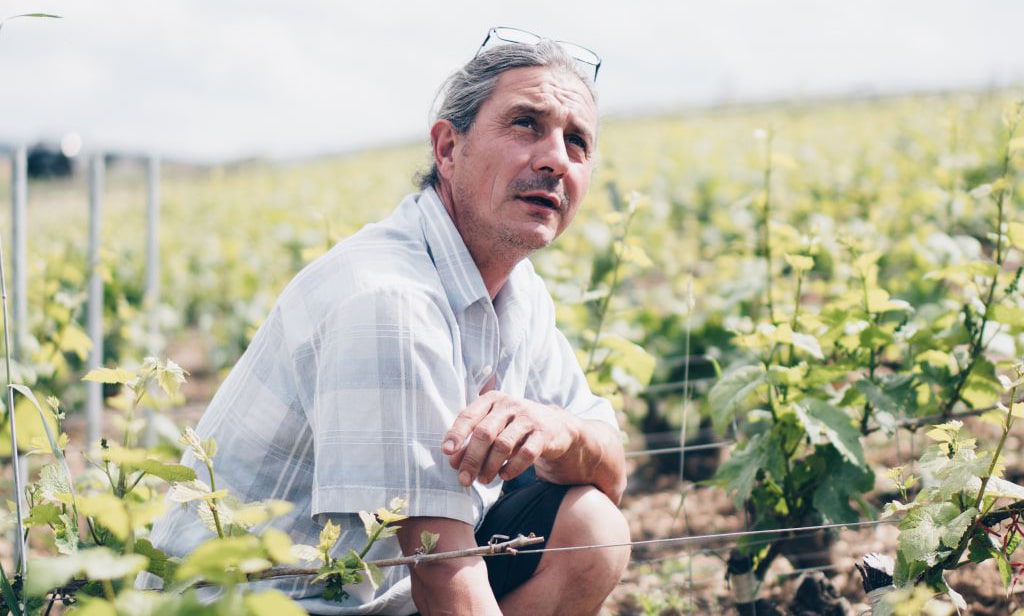
Champagne Piollot is a wine house with a heritage spanning several generations, its roots reaching back to the mid-19th century. The Piollot family's vines lie mainly around Polisot, and it was in this very village that Roland Piollot's great-grandfather led the famous Aube winegrowers' revolt of 1911, which demanded that the Aube be recognised as an official part of Champagne. Since then, a new generation of growers has made its mark in the Aube, Roland among them – characterised by dynamism and a striving for authenticity. Roland himself returned to the family estate in 1986 and decided to start bottling wines under his own name. His father had previously cultivated and replanted the family vineyards using traditional massal selection, also preserving rare grape varieties such as Pinot Blanc at a time when many neighbours were replacing them with Pinot Noir and Chardonnay. Roland continued this legacy, nurturing the diversity of the vines – on their 8,5-hectare estate, alongside the predominant Pinot Noir including grapes unusual for the region, such as Arbane and old plots of Pinot Blanc.
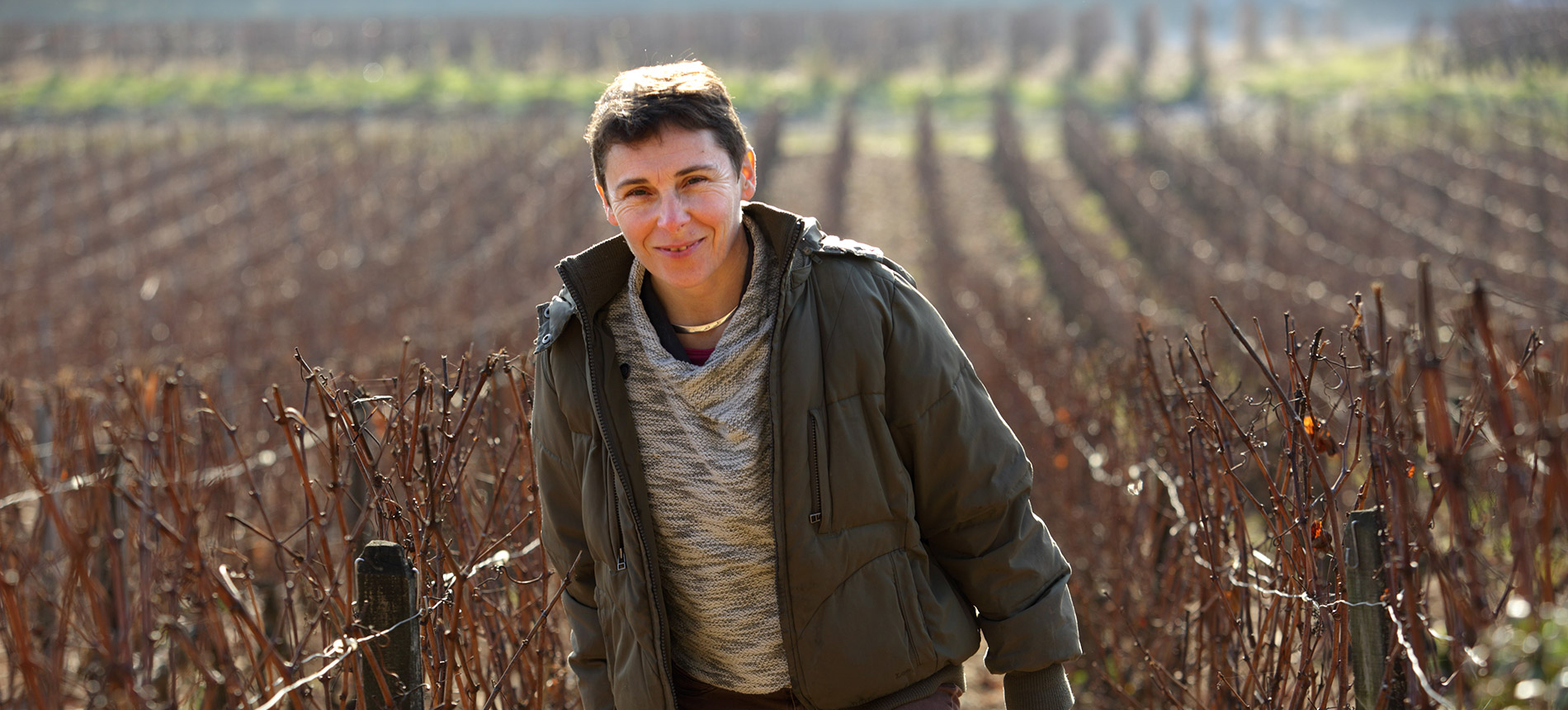
Champagne Marie Courtin was, however, born as an entirely new, personal project. Dominique Moreau founded her tiny 2,5-hectare estate only in 2005, dedicating it to her forebears – she named the house after her grandmother Marie Courtin, whom Dominique fondly calls “a woman of the land”. From that very first vintage, Dominique set out to make wines on the principle of “one plot, one variety, one vintage” – each of her Champagnes comes from a specific vineyard, a single grape variety and a single vintage, with no blending and no pursuit of a consistent house style. In essence, this approach meant breaking away from the customs of the traditional Champagne houses, where blending different plots, varieties and vintages for a consistent taste was the norm. Dominique’s philosophy – like that of many other grower-Champagne makers – is the opposite: the “house style” is the terroir itself, the unique character of each vineyard. Roland and Dominique’s daughter Jeanne has grown up in this same spirit and has recently joined the family business, carrying the legacy forward as the sixth generation.
The move to biodynamics
Both houses have been pioneers of Champagne’s in the green revolution. Roland Piollot converted the family vineyards fully to organic farming by 2009, abandoning chemical fertilisers and pesticides overnight. It was a radical change – the previous standard approach (with a typical range of Brut, rosé and vintage Champagne) gave way to a terroir-driven philosophy. The Piollot family decided to focus on three cuvées, each made from a single vineyard and a single variety: made from Pinot Noir, “Côme des Tallants”, Chardonnay “Champs Rayés” and, as a point of local pride, dedicated to 100% Pinot Blanc “Colas Robin”. These wines, named after their respective field or its distinctive feature, brought out the individuality of each site. A constant drive towards sustainability led to the Piollots also being awarded official Demeter biodynamic certification.
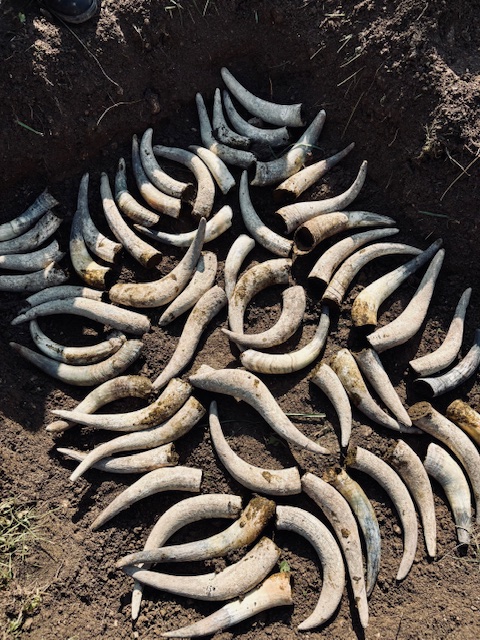
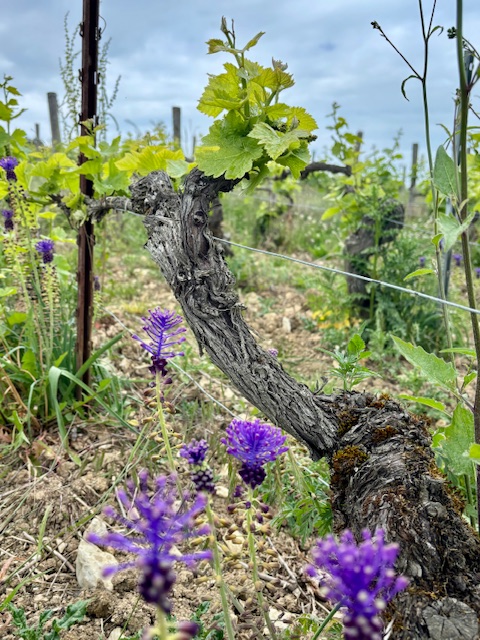
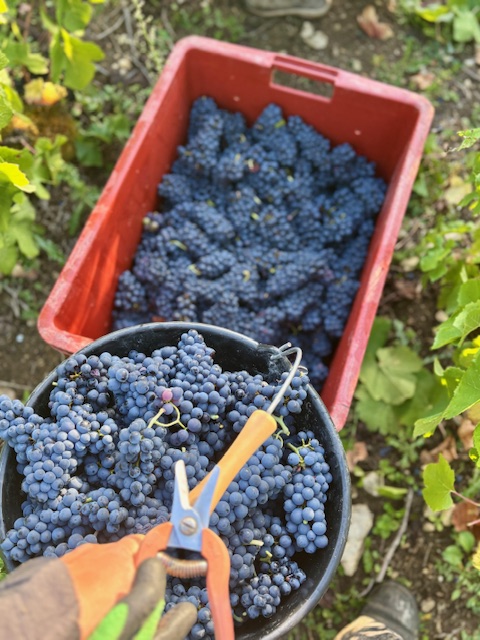
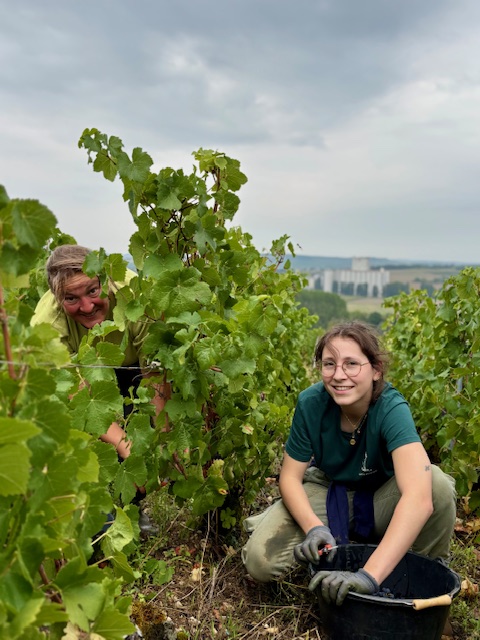
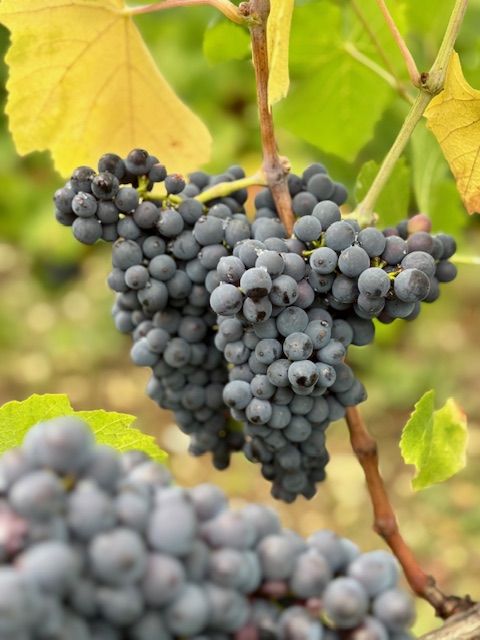
Dominique Moreau began transforming her estate right from the outset. The very first Champagne Marie Courtin vintages were made entirely biodynamically grown grapes. Over six years he converted his small Pinot Noir plots step by step until every row was chemical-free and living in harmony with the surrounding ecosystem. Both the Piollot and Marie Courtin vineyards are tended by hand – weeding, thinning and harvesting are done by human hands rather than machines. Instead of synthetic fertilisers, animal compost (e.g. composted cow manure) and plant infusions are used; Dominique even adds valerian extract to her compost to strengthen the plants’ resilience. Chemical crop-protection products and herbicides are not used at all – disease prevention relies on biodynamic preparations (e.g. the silica preparation) and the vines’ natural immunity. Both Piollot and Moreau have achieved official organic certification (Ecocert), and Dominique has also received international Demeter certification, confirming that her production is fully biodynamic.
Terroir and wine style
Côte des Bar the region's soil is special – the mix of limestone and marl from the Kimmeridgian age is more reminiscent of Chablis in Burgundy than of the traditional Montagne de Reims soils. It gives the wines here a distinctive minerality and saline line. This is precisely the character Roland and Dominique seek to bring out in their Champagnes. Whereas the big Champagne houses pursue a consistent “house style” by blending harvests from different areas, the grower Champagne movementspirit, the character of the Piollot and Marie Courtin wines lies in their own vineyard plots. Roland Piollot has said that every vintage and every vine has its own story to tell – which is why he makes most of his Champagnes from a single year’s harvest, from a single variety and often even from the fruit of a single plot. This makes it possible to distinguish the nuances of each vintage rather than blending them into one uniform taste. Dominique follows the same principle: for her, terroir is king, each vineyard acts as an independent character in the bottle.
Both producers’ winemaking methods serve one goal: to bring pure nature into the glass. Fermentation takes place with wild yeasts, which live on the grapes – Dominique has even isolated yeast cultures from her own vineyards and uses them for both the primary and secondary fermentation. No added sulphur or used only minimally: in the Piollot and Moreau cellars the wines are often made entirely without added sulphites, as they believe sulphur would mute the wine’s vibrancy and personality. Some of the wines are aged in oak – Roland uses traditional Champagne oak barrels and foudres in moderation, while Dominique ferments some cuvées in old small Burgundy barrels, which give the wine gentle room to breathe. Dosage – the addition of sugar has likewise been reduced to a minimum or to zero. Most of their Champagnes are brut nature or with a very low dosage, so that nothing masks the pure flavour nuances of the terroir. As a result, the wines are often extremely dry, with crisp acidity and a lively character, revealing Champagne’s somewhat wilder side.
Dominique Moreau’s Champagnes are known for their powerful character – they have even been described as “electric and filigree wines with deeply mineral salt crystals”. Yet all this intensity is wrapped in an elegant form: the wines open up gradually as they breathe in the glass, balancing power with fine acidity and stony purity. At first some Marie Courtin vintages may seem closed, but after the first glass has had time to breathe they “explode” with aromas, revealing nutty and brioche notes intertwined with a fruity core. Roland Piollot's wines is equally authentic in flavour – thanks to old massal-selection vines, the juice is highly concentrated, while the chalky note of the soil carries through into the wine, giving the Champagnes a linear, “honestly expressed” character. The bubbles in these Champagnes are often finer and naturally integrated with the wine, leaving a long, clean finish. These are Champagnes that are not mere aperitifs but fully fledged gastronomic wines, capable of complementing complex dishes at the table.
The most famous cuvées
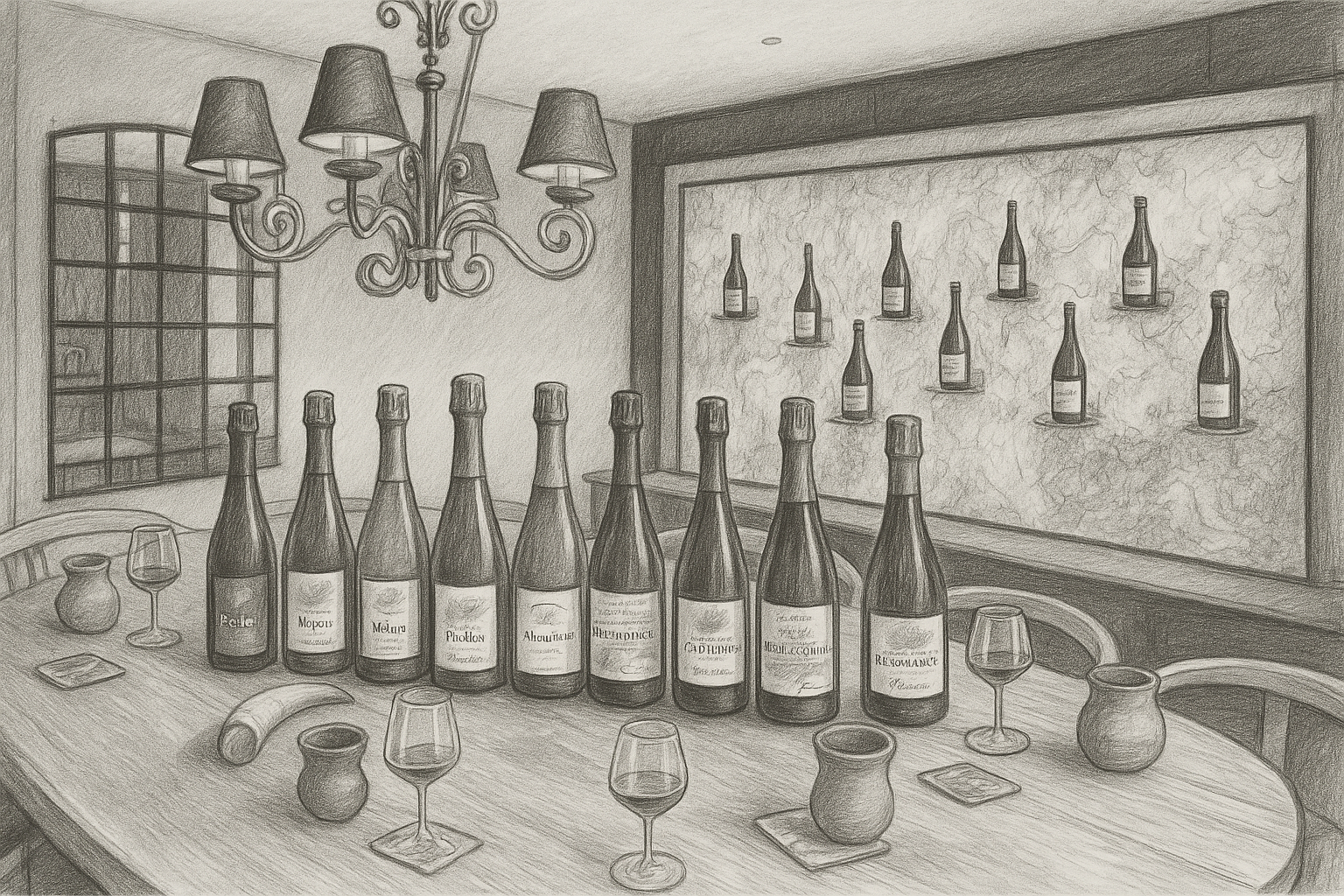
Both the small Champagne Marie Courtin and the historic Champagne Piollot have a number of acclaimed wines in their portfolios that have earned recognition among sommeliers and wine connoisseurs. Dominique Moreau divides her tiny annual production (only around 12–15 thousand bottles) into several special cuvées, each bearing a symbolic name. Most of the wine is split between two Blanc de Noirsbetween them: “Résonance” and “Efflorescence”. Both are 100% Pinot Noir, but the first is fermented in stainless steel tanks and aged on its lees in bottle for 36 months, while the second spends 12 months in oak barrels and rests on the lees for 36 months. Résonance comes from the top of the hill and offers sharper acidity and minerality, whereas the grapes for Efflorescence grow lower on the slope, where they achieve greater power – Dominique has said that this plot “gives the wine more strength and potential”. “Concordance” is the third key wine – also a Blanc de Noirs from Pinot Noir, but distinctive in that it is made entirely without added sulphur. This zero-sulphite extra brut Champagne cemented Dominique’s reputation as a skilled winemaker, showing that she can “tame” a wine in an entirely natural way. In addition, Marie Courtin makes a minuscule quantity of Blanc de Blancs: the oak-aged Chardonnay is called “Eloquence”, a Chardonnay-Pinot Blanc blend “Présence” highlights the notes of the rare Pinot Blanc. The range also includes two unique rosé de saignée -style rosé Champagne, “Indulgence” and “Allégeance”, made from Pinot Noir with brief skin contact and likewise sulphur-free. Each of these cuvées reflects Dominique's spiritual beliefs – “Résonance”, for instance, refers to the energetic balance between earth and sky that influences the vine's growth, while “Efflorescence” symbolises continual development and blossoming, hinting at the wine's ability to evolve in bottle over time. These poetic names make it clear that these are no ordinary mass-produced Champagnes, but true cult wines, cherished by connoisseurs.
Roland Piollot’s the range is somewhat wider, but a few distinctive cuvées have shaped their reputation. After the switch to organic farming, Piollot began focusing on one grape variety and one plot at a time. Thus were born “Côme des Tallants” – 100% Pinot Noir grown on the south-facing Côme des Tallants slope near Polisot; “Champs Rayés” – pure Chardonnay from a vineyard crossed by two marl seams of different colours (hence the name “striped field”); and “Colas Robin” – a rare 100% Pinot Blanc Champagne from an old vineyard planted in 1955. The latter is particularly meaningful, as Pinot Blanc has all but disappeared from Champagne – the Piollots kept it alive while others around them grubbed it up, and today this wine offers a special, nostalgic experience. In addition to these flagships, Piollot also makes Brut Réserve(a secret blend for long-standing regular customers, a memento of Roland’s father’s time) and, in smaller quantities, rosé’s named “Les Protelles”, made by traditional skin maceration of Pinot Noir, resulting in a berry-driven, structured rosé Champagne. They also have an exceptional “Mepetit” a Pinot Meunier Champagne bearing the name – although Meunier is scarce in the Aube (only ~6% of Piollot’s vineyards), the family wanted to showcase this often underrated grape in a cuvée of its own. All Piollot Champagnes share a common thread: they spend a very long time on their lees in bottle, often 4–6 years, before being disgorged and bottled with little or zero dosage. Such patience in ageing gives the wines depth and a fine mousse that has been compared to the prestige cuvées of the great houses, yet the flavours carry the spirit of the home vineyard.
Impact on the grower Champagne movement
Roland Piollot and Dominique Moreau have today become the movement of small Champagne growers icons. Their work in the Côte des Bar – a region once regarded as peripheral – has shown what quality and character can be achieved when a wine is made by the grower from start to finish. For decades the Champagne industry focused on mass production using methods dictated by the big houses, but the success stories of Piollot and Marie Courtin prove that the other extreme – small-scale, organic, terroir-driven production – also yields top quality. Today, Champagne’s the biodynamic movement firmly established itself precisely thanks to houses such as Vouette et Sorbée, Piollot and Marie Courtin, who have led the way with their success. Many younger winemakers across Champagne (especially in the Aube) have drawn inspiration from them and turned to nature-friendly methods.
Although Dominique and Roland sell a large share of their wines abroad – indeed, around 80% of Champagne Marie Courtin's production finds its way outside France – their Champagnes are increasingly appreciated at home too. Their membership of growers' associations (Dominique, for example, is an active member of the group promoting terroir wines, Terres et Vins de Champagne) and regular appearances at trade fairs have helped to change attitudes. For anyone still in doubt, there are lessons to be learned from the big names too: the prestigious Cristal Champagne is now made largely from biodynamically grown grapes, confirming that Champagne's “green turn” is in full swing. Yet Piollot and Marie Courtin’s contribution lies above all in the fact that they took this step when it was not a trend but simply a conviction. The wine philosophy they cultivate – respecting the land and tradition, daring to experiment with small batches and putting quality before quantity – has been an inspiration to many.
Champagne Piollot and Champagne Marie Courtin story is like two sides of the same coin. On one side lies a heritage and experience spanning generations; on the other, a fresh outlook and an innovative spirit. Together, Roland Piollot and Dominique Moreau have shown that the future of Champagne belongs to those who dare to stay true to the soul of their land. Their biodynamic Champagnes, full of character and vitality, prove that a small family wine house can stand shoulder to shoulder with the big names – and sometimes even outshine them – when backed by sincere passion and an unwavering commitment to quality and naturalness.